

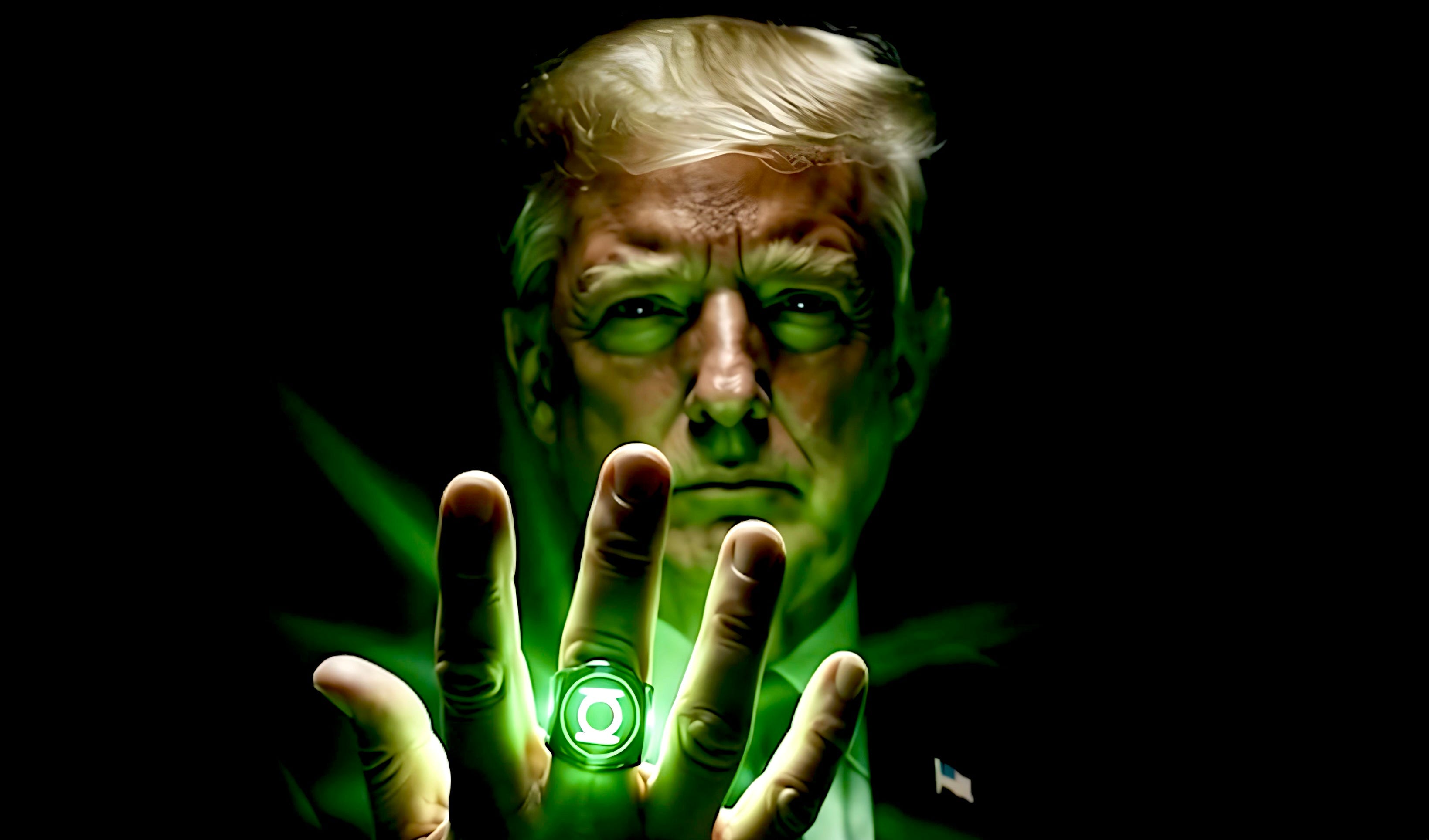
SICILY, ITALY (SEPTEMBER 8, 2026) — President Trump posted a series of ridiculous AI slop photos on Truth Social over the Labor Day weekend. A few show Trump assaulting the Prime Minister of Canada during a hockey game (he can’t play hockey). Others show celebrity critics like Robert De Niro appearing to support Trump (they don’t). And he’s depicted in various kinds of military uniforms (he dodged the draft to avoid military service).
He’s posted this kind of “slopaganda” in the past.
As comedian Dave Chappelle said during an SNL monologue on November 12, 2016, “We’ve actually elected an internet troll as our President.”
But while these AI-generated antics can be passed off as mere trolling, or evidence of mental illness, the reality is that this kind of thing is dangerous propaganda. And the most dangerous thing about it is that, according to emerging science, it works (and therefore is likely to be increasingly emulated).
Research shows that AI-generated images still shift people’s beliefs even when the images are labeled as AI-made or known to depict something false, because the effect operates below the threshold of conscious reasoning. And once a false image plants a belief, corrections rarely erase it fully; the original impression lingers and keeps shaping how people think.
READ: The Attachment Economy, Computerworld, Gastronomad newsletter, Gastronomad book
LISTEN: Superintelligent, TWiT, Gastronomad podcast
JOIN: The Gastronomad Experience
FOLLOW: Gastronomad on Surf Social, Machine Society on Surf Social, Bluesky, Reddit, Notes, Mastodon, Threads, X, Instagram, Facebook, Linkedin!
LOOK AT: Mike Elgan Photography
In general, AI chatbots and AI-generated imagery are extremely effective at manipulating opinion.
Here are the conclusions of recent studies on the propaganda powers of AI:
AI-generated faces and deepfakes are rated more trustworthy than human faces.
The longer someone uses AI, the less able they are at identifying fake news as such and the more confident they become in their own ability to spot fake news.
Chatbots can also “seduce” users, making many users believe they have formed an intimate relationship, and that the chatbot likes or loves them, and is counting on them.
And, finally, AI chatbots are far better than people at persuading others on political opinions. AI chatbots do this by generating rational, evidence-based arguments at very high speeds. They can convince people to accept, or reject, conspiracy theories, depending on how they are used.
And that’s the good news. If used correctly, AI chatbots can convince people to stop subscribing to baseless conspiracy theories, and theoretically even deprogram those in the grip of cult-induced delusions.
The only problem is that this extremely beneficial use for AI’s powers of persuasion lacks a business model.

If I may, I believe there is an aspect of of why human psychology is currently so fractured or primed to accept these manipulations in the first place. In the study of psychology (and my niche hole of Disinformation), this issue is far far older than the first computer! Now, AI has made it so easy to make slopaganda, I 100% agree with that.
But it worked because something inside of us.
And I'm still trying to figure that out.