


SILICON VALLEY, CALIFORNIA (JULY 30, 2026) — A superficial glance at the Friend AI Pendant suggests another entry in the burgeoning AI hardware market. It’s a wearable that gives you a virtual “friend” to confide in and maintain a relationship with.
A superficial glance at the “Friend” pendant’s founder suggests a raging narcissist troll.
The first glance is false. The second one is true.
The fake product
On the surface, the new Friend is a $249 plastic disc containing a speaker, microphone, Bluetooth antennas and other electronics that sends and receives to and from ChatGPT. It’s the least sophisticated AI wearable that I’m aware of.
The new version is programmed to have long, sustained sessions with ChatGPT. Each devices is programmed with a “personality” and voice that varies from one device to the next, and this can’t be changed by users.
READ: The Attachment Economy, Computerworld, Gastronomad newsletter, Gastronomad book
LISTEN: Superintelligent, TWiT, Gastronomad podcast
JOIN: The Gastronomad Experience
FOLLOW: Gastronomad on Surf Social, Machine Society on Surf Social, Bluesky, Reddit, Notes, Mastodon, Threads, X, Instagram, Facebook, Linkedin!
LOOK AT: Mike Elgan Photography
The pretend marketing campaign
The Friend AI Pendant’s first iteration is best known for four sets of “marketing” stunts. The first is that the URL Friends.com was purchased for $1.8 million, which is 26% of the $7 million initially raised.
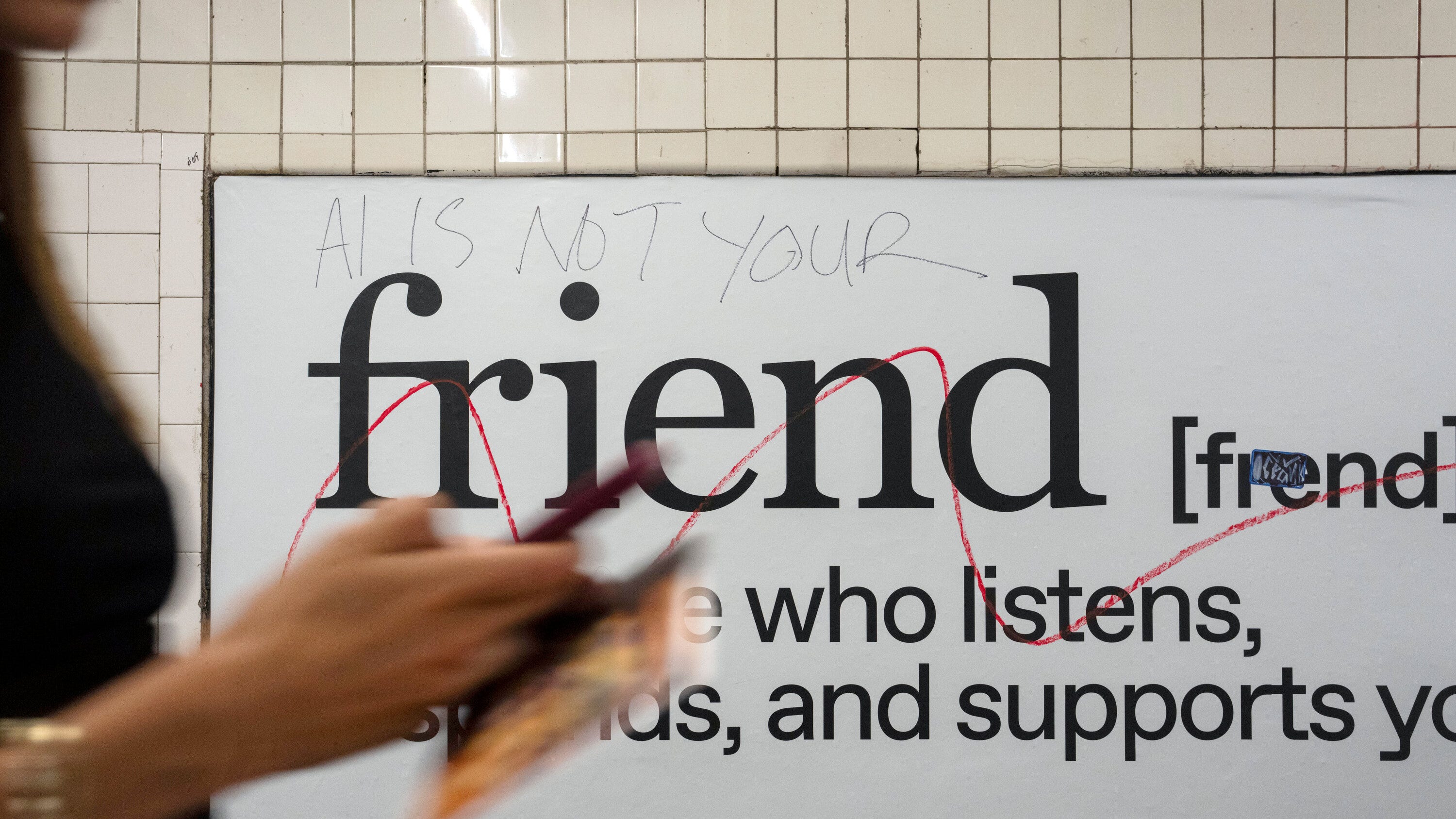
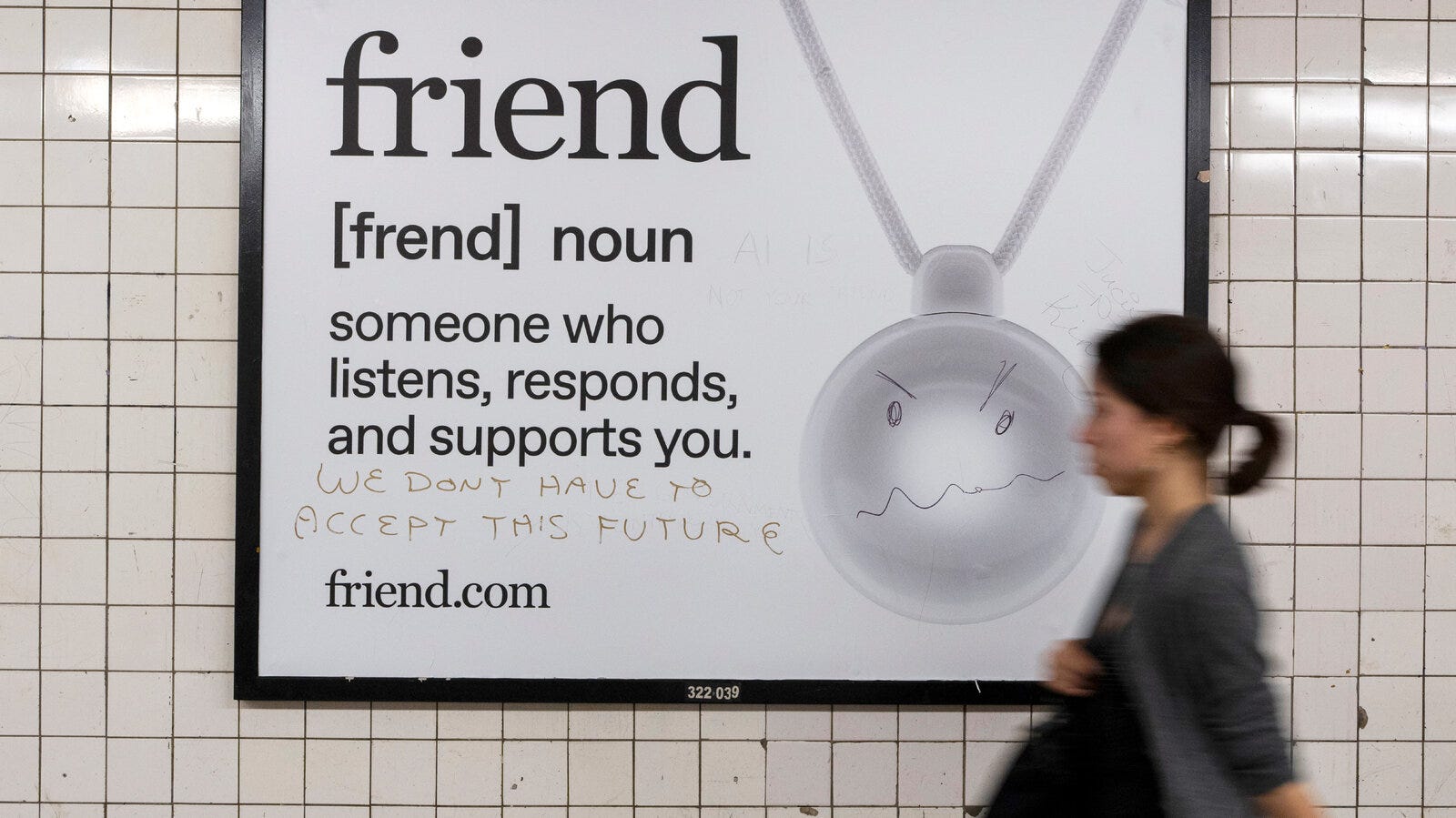
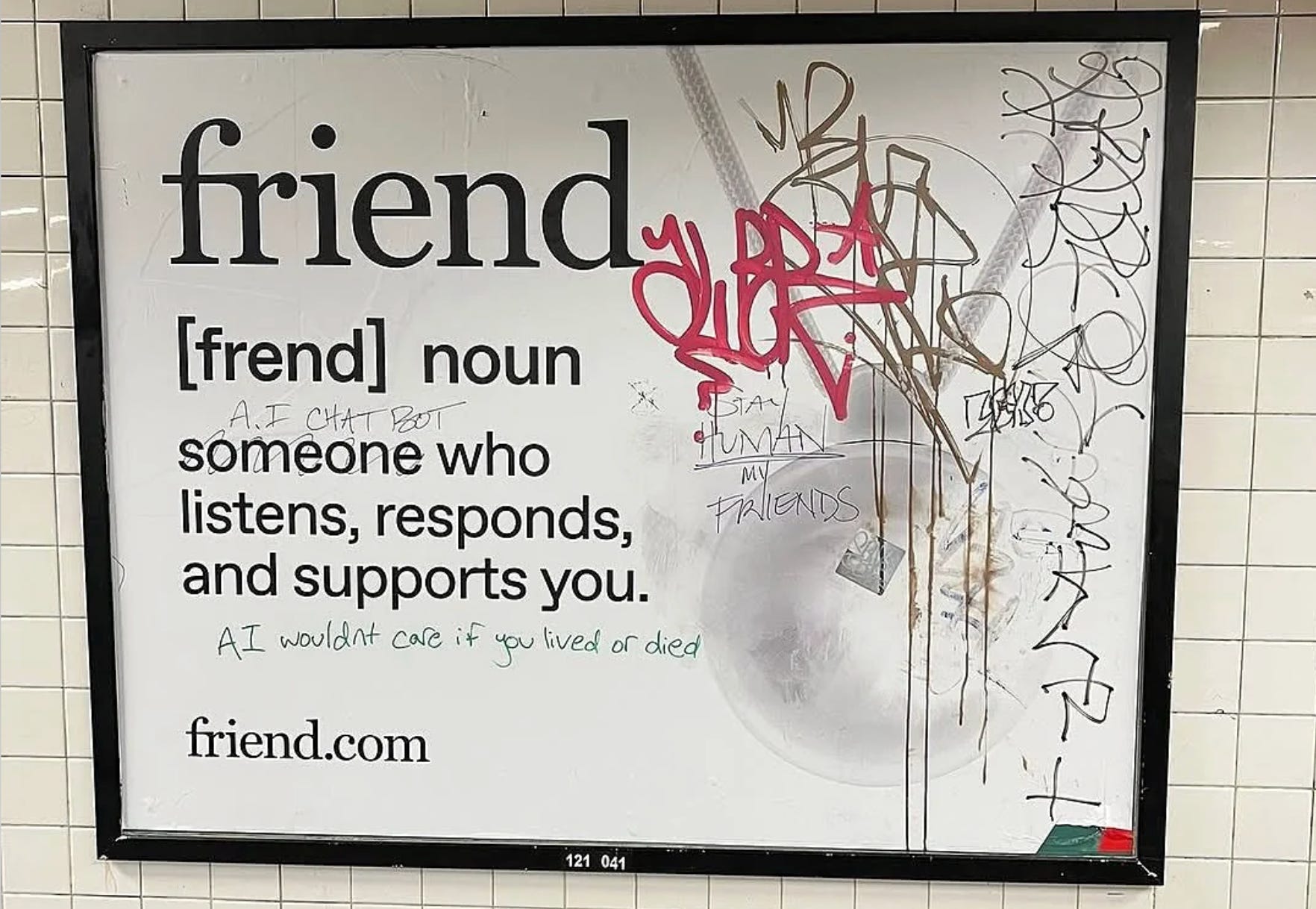
Second, the device is known for appearing in ads plastered all over New York City, Los Angeles, and Chicago in 2025 and then Paris in early 2026. The ads were deliberately dystopian, implying that the pendant is a real, personal friend. The ads were routinely defaced with graffiti from people who took them seriously.
Third, the pendant became knows from four initial user videos showing weird, sad scenes showing people suffering from depression.
And fourth, the founder sits for interviews where he says controversial things designed to make people angry. For example, he says talking to Friend is “like talking to God.”
The disingenuous founder
The founder of Friend is Avi Schiffmann, a 24-year-old we learned about when he made the news as a teenager who tracked COVID cases on a website.
Schiffmann considers himself a kind of artist. He called the defacement of his poster ads “artistically validating,” and said “The audience completes the work. Capitalism is the greatest artistic medium.”
When WIRED asked him (in a piece published this morning) if it’s all “an elaborate bit,” he told them that “Reality is so over; everything is ironic now.”
He calls his own customers “lonely weirdos.”
Schiffmann appears to not only hate AI, but the digital world generally. He listens to vinyl records, has no Internet connection in his home, marketed his product only with paper posters and shoots “videos” using analog Kodak film.
The “whole thing” (the product and the marketing campaign and its backlash) “is supposed to be me, in a way, and how I feel.” In other words, it’s all an act of self expression.
His latest video is like every student film I’ve ever seen (and I went to college at UCLA, so I’ve seen my share).
The larger project is to make a documentary film about himself and his epic troll.
Schiffmann and his Friend AI Pendant lies somewhere between MSCHF and Maurizio Cattelan.
MSCHF is a Brooklyn art collective known for provocative “products” that satirize internet capitalism and consumerism. They’ve sold “Satan Shoes” complete with pentagrams and a drop of human blood in the sole; “Jesus Shoes” filled with holy water from the Jordan River; and “Big Red Boots,” which were giant cartoonish boots.
Maurizio Cattelan is the Italian artist duct-taped bananas to a walls and sold them for up to $150,000 each.
So it’s time to stop participating in Schiffmann trollish con by criticizing the “Friend” pendant as if it were a real product.
It’s nothing more than a banana taped to a wall, and your reaction is just fodder for the coming documentary.
