
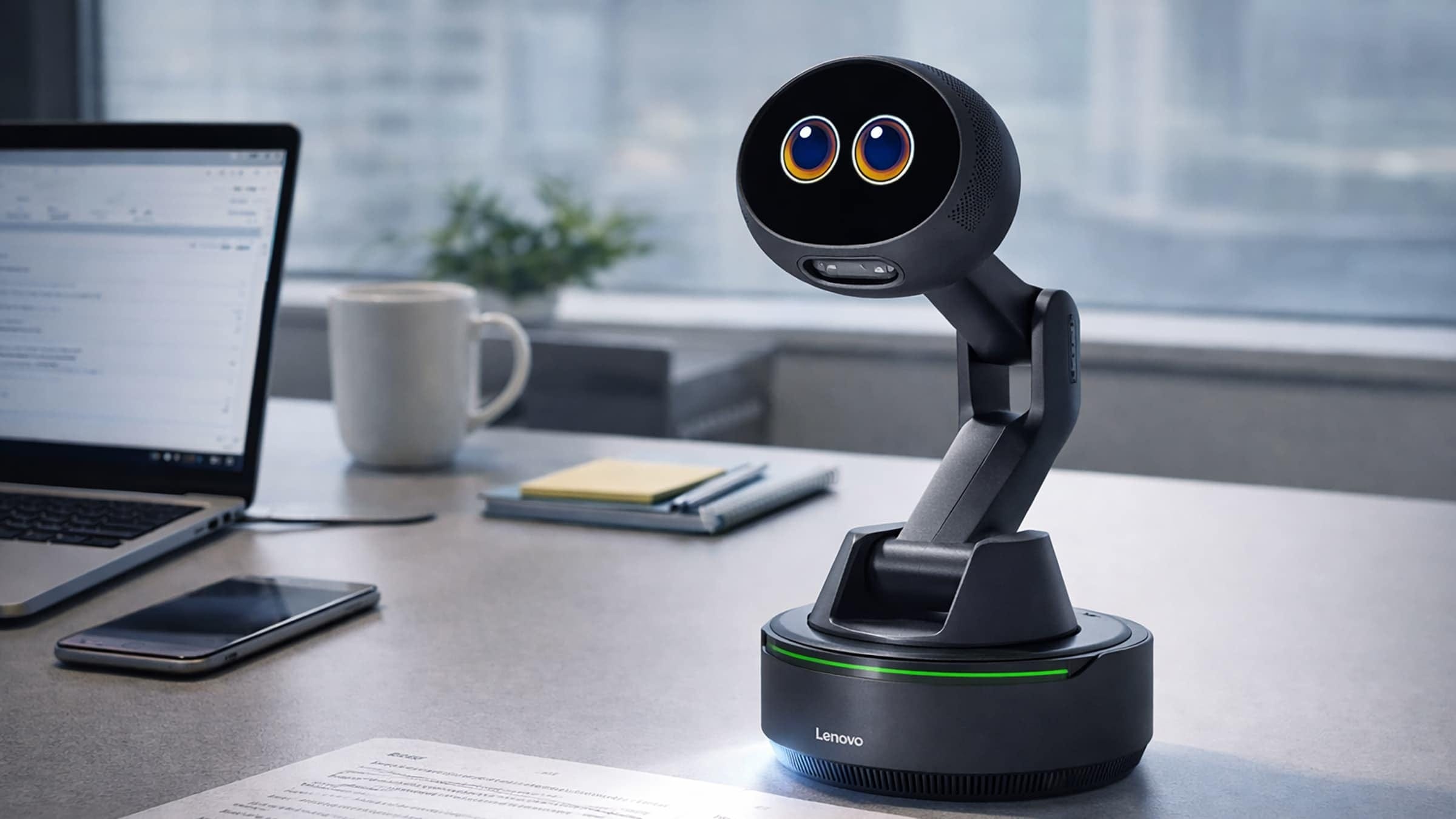
New Attachment Economy hardware lives on your desk
The desktop robots are coming, and they want more than just your attention.
We’re on the brink of a new phase in the Attention Economy. It’s called the Attachment Economy. The mere grabbing of attention is no longer sufficient. Companies now see an opportunity to use AI to enhance their chatbots and robots with “personality” designed to capture our emotions and make us feel “attached.”
We’ve already seen a new generation of online Attachment Economy software products. Replika, Character.AI, Talkie AI, Candy AI, Nomi AI, Kindroid, Chai AI, and Romantic AI all rely on faking human characteristics to hijack human emotions for the benefit of the companies selling subscriptions.
And hardware-based Attachment Economy products have emerged. Over the past year, AI hardware products explicitly designed to foster emotional attachment have emerged, including Casio’s Moflin, Mission AI’s Unee, Euvola, Tuya Smart and Robopoet’s Fuzozo, Lovense’s Emily and Ludens AI’s Cocomo and INU.
Most of those hardware products are mere novelties at this point. But some of the biggest companies are working on Attachment Economy hardware gadgets that live where you live: at your desk.
By putting a robotic accessory on your desk that fakes emotional intelligence, these companies are hoping you’ll pay handsomely for their products and prioritize their use above other devices.
The Honor ‘Robot Phone’
The Honor Robot Phone is an Android smartphone unveiled March 1 with a fold-out camera feature that works like a DJI Osmo Pocket 4. When it untucks from its compartment, it’s a 200-megapixel camera on a gimbal, but uses AI to simulate reactions to what it pretends to see through the camera.
The phone simulates self-expression by rotating, tilting, nodding, shaking and other “gestures.” For example, it can nod in agreement when you’re talking to it or say “no” by shaking its “head.” It can appear to “dance” to music and simulate other kinds of body language recognizable as such by people.
Honor advertises the product as a sentient being that looks around at the world in delight and wonder.
While the Honor phone is a mobile device, its main use is to sit on its cradle on your desk.
Honor plans to start selling the phone in the second half of 2026.
Lenovo’s AI Workmate Concept
Also on March 1, Lenovo unveiled a proof-of-concept device called the AI Workmate Concept. It’s basically black softball-sized round object attached to a robot arm. The robot has a face on a screen (including a mustache, for some reason) that makes facial expressions.
Based on the demos, the device has a projector that can display information on the desktop or a nearby wall. It’s connected to the company network and appears agentic, meaning it can go fetch information based on the conversations it overhears or direct user voice interaction. It can also accept input in the form of hand gestures or typed prompts.
The Workmate concept also has a scanning feature. So it can scan documents or signatures you write on paper and integrate those as digital data to be processed by the AI, printed or added into presentations.
The device doesn’t do any novel work beyond regular agentic AI stuff. The difference is that it has a “personality” designed to make you feel like it’s a sentient being that’s helping and befriending you.
Apple’s ELEGNT
If these products remind you of something, you might be remembering my article on Apple’s ELEGNT research project.
That piece was based on a research paper published by Apple in January 2025, called “ELEGNT: Expressive and Functional Movement Design for Non-Anthropomorphic Robots.”
Apple’s experimental prototypes resemble the iconic Pixar desk lamp, Luxo Jr. It’s basically a lamp on an articulated arm connected to a base that moves, nods, shakes, bows and otherwise conveys recognizable body language gestures.
[Note: You’re reading the free version of Machine Society, which does not include the full column. To read everything in every issue, sign up for the paid version for $5 per month, or (for a limited time only) join my “marketing department” to get the paid version free.]
More from Mike
Machine Society, Computerworld, Superintelligent, TWiT, blog, The Gastronomad Experience, Book, Bluesky, Reddit, Notes, Mastodon, Threads, X, Instagram, Flickr, Facebook, and Linkedin!


Mike, this nails the pivot: attention is easy to buy, but attachment is durable—and the durable thing is what turns “assistant” into infrastructure.
What struck me is how little of this is about capability and how much is about interface psychology. A chatbot that answers is a tool; a desk object that reacts becomes a presence. Once you add gestures, gaze, nods—social cues we’re trained to read—you’re no longer competing on features. You’re competing on relationship.
The desk is the perfect placement, too. It’s repetition + proximity + routine—exactly the conditions that create habit. That also makes consent and privacy the load-bearing beams here: always-listening, always-looking, network-connected “workmates” don’t just help; they reshape what the workspace is.
If this category is coming, I’d love to see your take on what “ethical attachment” would require: explicit mode indicators, user-controlled personalities, local-first processing, and hard limits on persuasive behavior. Without that, the “friend” mask becomes a subscription funnel.